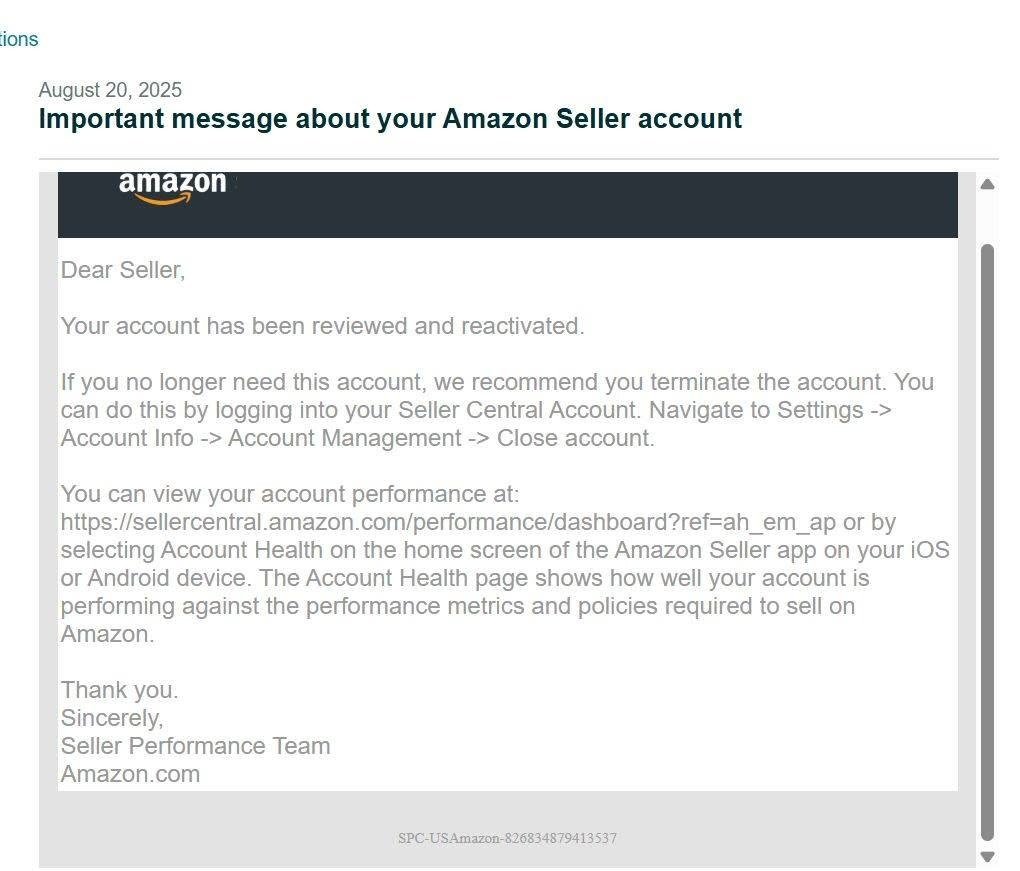
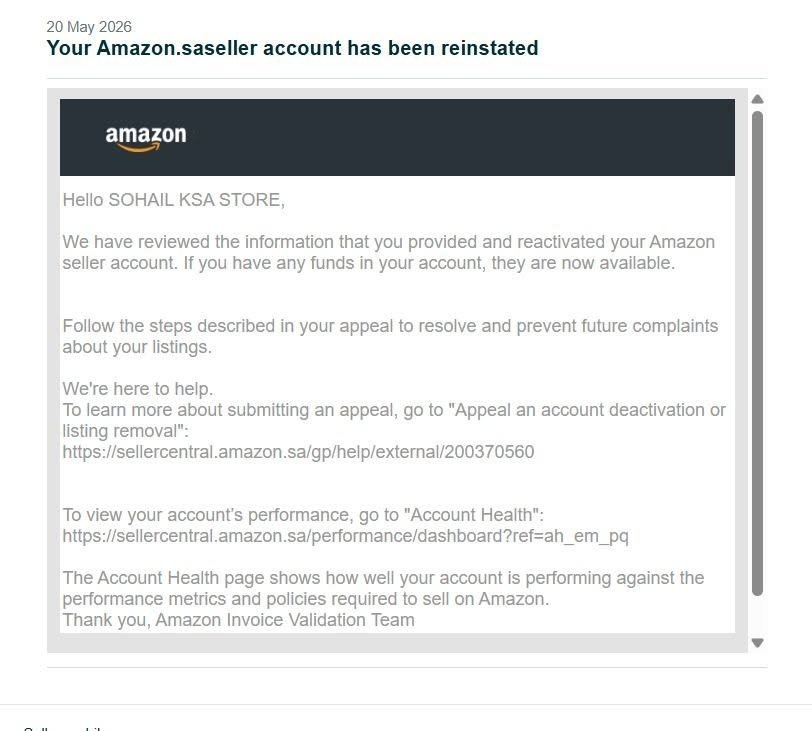
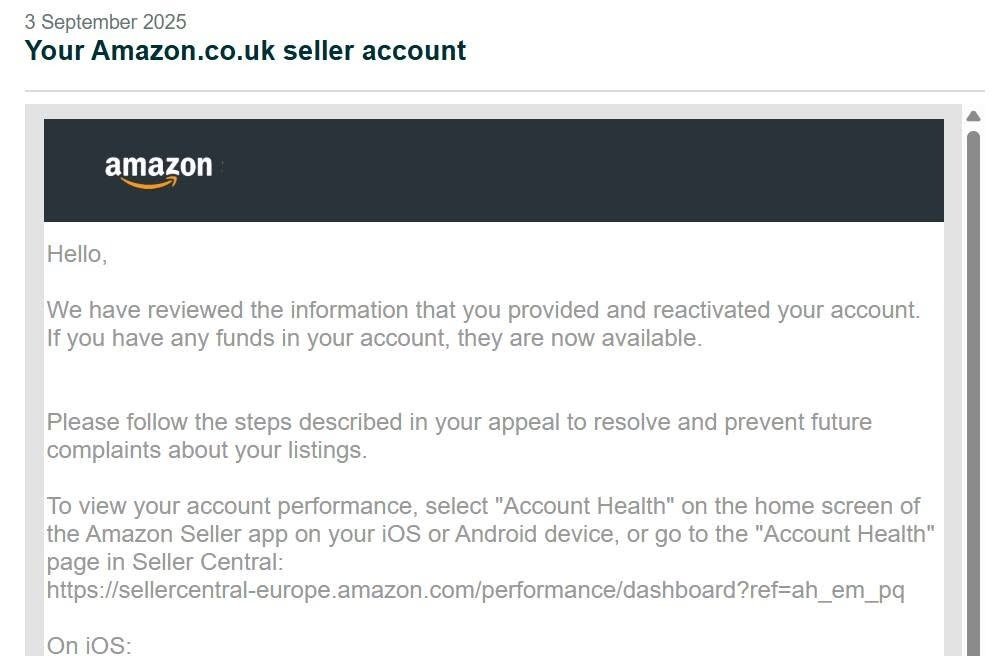
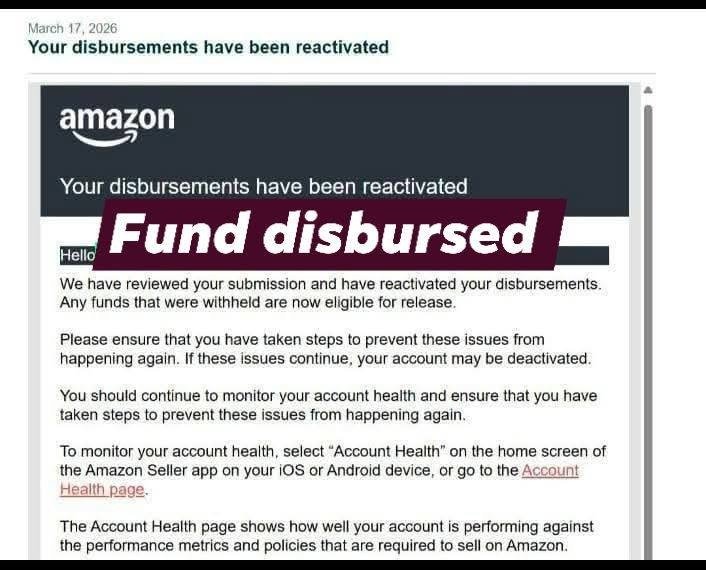
Real-World Amazon Seller Reinstatement Case Teardowns
Explore our anonymized case files detailing how our evidence-first methodology helped brands, distributors, and private-label merchants recover from severe account deactivations, Section 3 investigations, inauthentic invoice rejections, and held funds freezes.
Case Study • ASIN Recovery
ASIN Reinstatement With a Rebuilt Evidence Packet | Case Study
A private-label seller doing $120k/mo had their primary hero ASIN suppressed over customer authenticity complaints. We audited factory records, reconciled 365-day unit sales, and restored catalog standing.
Read case teardown →
Case Study • Section 3 Code of Conduct
Section 3 Response Addressing Relationship Risk | Case Study
A multi-brand seller deactivated under Section 3 for alleged association with an unrelated suspended store was restored after establishing verified corporate separation.
Read case teardown →
Case Study • IP & Brand Protection
IP Complaint Response With Rights-Owner Strategy | Case Study
A brand reseller faced counterfeit and trademark complaints risking account closure. We coordinated verified supply-chain verification and secured formal rights-owner complaint retraction.
Read case teardown →
Case Study • Funds Recovery
Held Funds Released via Structured Disbursement Request | Case Study
A seller had $84,000 in payouts withheld past the standard 90-day reserve period. We compiled fulfillment proof and secured complete disbursement approval.
Read case teardown →
Case Study • Appeal Rescue
Failed Appeal Rescue Through a File Rebuild | Case Study
A seller with 3 rejected self-appeals faced an automated 'we may not respond' dead-end. We rebuilt the case timeline from the ground up and secured reinstatement.
Read case teardown →
Case Study • Sourcing Compliance
Invoice Verification Gap Repair | Case Study
A wholesale seller whose supplier invoices were rejected due to entity discrepancies and layout gaps passed Amazon verification after a structured supply-chain audit.
Read case teardown →
Case Study • Related Accounts
Related Account Appeal Rescue | Case Study
A business suspended for an alleged related-account link to an ex-employee dormant profile proved complete corporate separation and achieved full reactivation.
Read case teardown →
Case Study • Product Compliance
Restricted Product Compliance Appeal | Case Study
A dietary supplement brand had listings removed for prohibited health claims. We coordinated FDA-compliant listing cleanup and restored ASIN eligibility.
Read case teardown →
Case Study • Fulfillment Integrity
Dropshipping Policy Violation Correction | Case Study
A merchant suspended for dropshipping policy breaches overhauled their fulfillment infrastructure with verified 3PL agreements and achieved account reactivation.
Read case teardown →
Case Study • Review Policy Defense
Review Manipulation Allegation Response | Case Study
A brand owner flagged for review policy violations over packaging inserts audited customer collateral, updated warranty workflows, and resolved all account warnings.
Read case teardown →
Case Study • KDP Publishing
KDP Account Recovery Path | Case Study
A KDP publisher whose account was terminated over metadata and content formatting verified intellectual property licensing and restored their entire catalog.
Read case teardown →
Case Study • Enterprise Compliance
Account Health Prevention Program | Case Study
An enterprise seller with declining Account Health Rating established daily compliance routines, cleared pending warnings, and achieved a perfect 1,000 AHR score.
Read case teardown →
Our Evidence-Backed Methodology
We do not rely on generic promises or automated templates. Every case file is built directly around Amazon's notification, account-level performance logs, and verified commercial documentation.
All case studies are anonymized and outcome-specific. Past performance does not guarantee future results; Amazon makes every final determination.